

Does Size Matter? It Does When It Comes To Your Plate .

Does Size Matter? It Does When It Comes To Your Plate .

Category: Weight Loss
April 2, 2013 - 9:29pm — DrPetteruti
I remember as a child being admonished by my grandmother not to "eat with my eyes." of course what she meant was not to use my visual perception as a guide toward the volume of food I should consume. It turns out, as so often happens with the age-old advice of our elders, that her advice right on target and has since been validated by modern research.
Over the years not only have our portions been "super-sized," but so has our dinnerware, our glasses and the other containers that hold our food. The process has been gradual. It's interesting to go into an antique shop and look at the size of coffee cups and serving plates from generations gone by. They seem charmingly petite by current standards.
Brian Wansink and the researchers at the Food and Brand Lab at Cornell University found that we tend to fill the space on our plates rather than actually making a conscious decision about how much food we need to fuel ourselves. Once the food is on the plate, we’re more likely to eat it. According to Wansink, we tend to eat 92% of any food we serve ourselves.
Other studies have demonstrated that the larger the serving plate or bowl, the more we tend to eat and the less we perceive the volume that we've consumed.
In one study, participants were told they were going to be rating a movie. The actual purpose of the study was to determine the effect that the size of the bowl had on the amount of popcorn the participants would eat. In both theaters, they had access to as much popcorn as they could eat. In one theater, the participants had a large bowl. In the other theater they were given a smaller bowl. The participants with the larger bowls consumed much more popcorn than the study participants with the smaller bowl.
In other studies, when people are given larger plates they eat much more food when compared to the study participants with smaller plates and when asked afterword to estimate how much they had eaten, they consistently and significantly under-estimate the amount of food they had consumed.
Take a look at the examples in the photographs. Isn't it remarkable how different the portion sizes seem to be? The one on the left is your traditional dinner plate, on the right a salad plate.
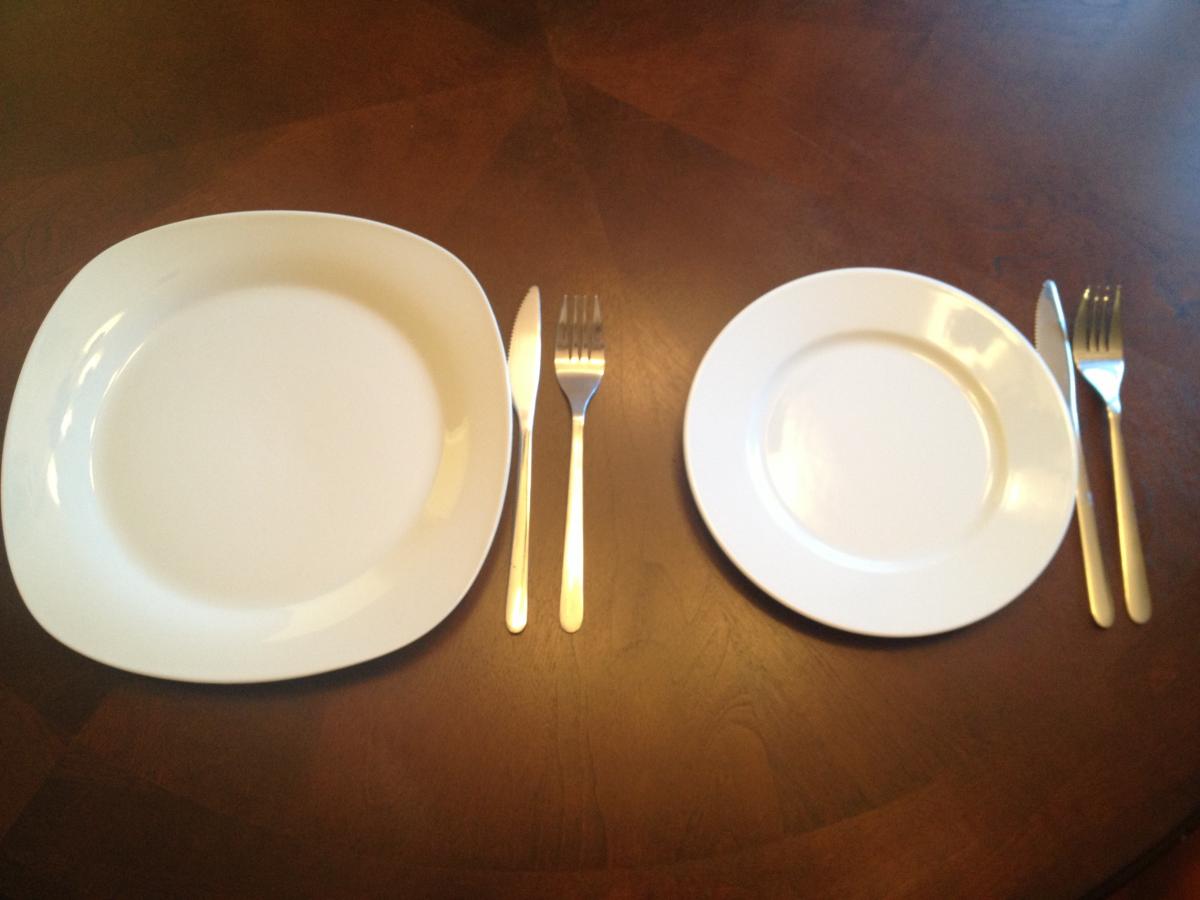
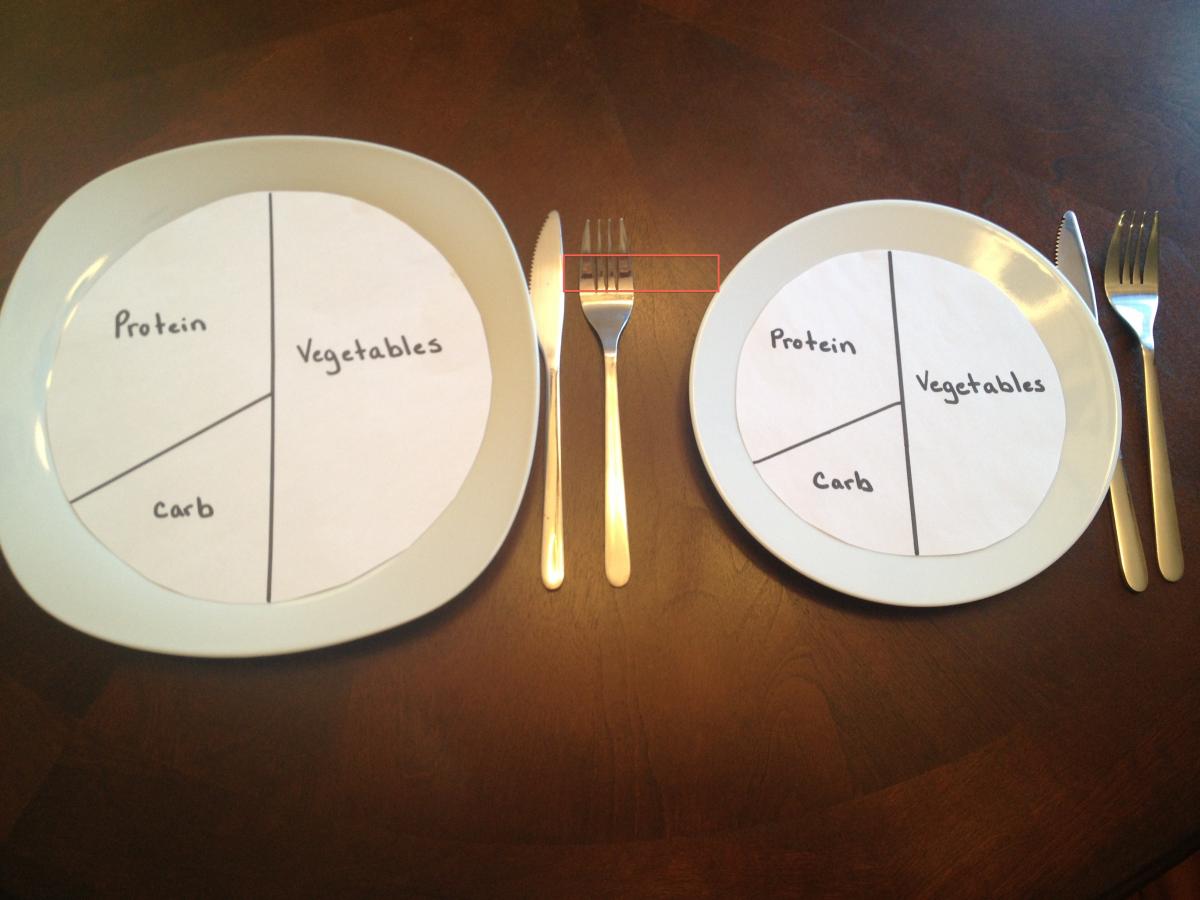
This type of visual distortion is a powerful force driving us to over eat. However, armed with this knowledge and your skills in premeditated discipline, you can structure your environment to use your visual perception to give you "shut off " cues.
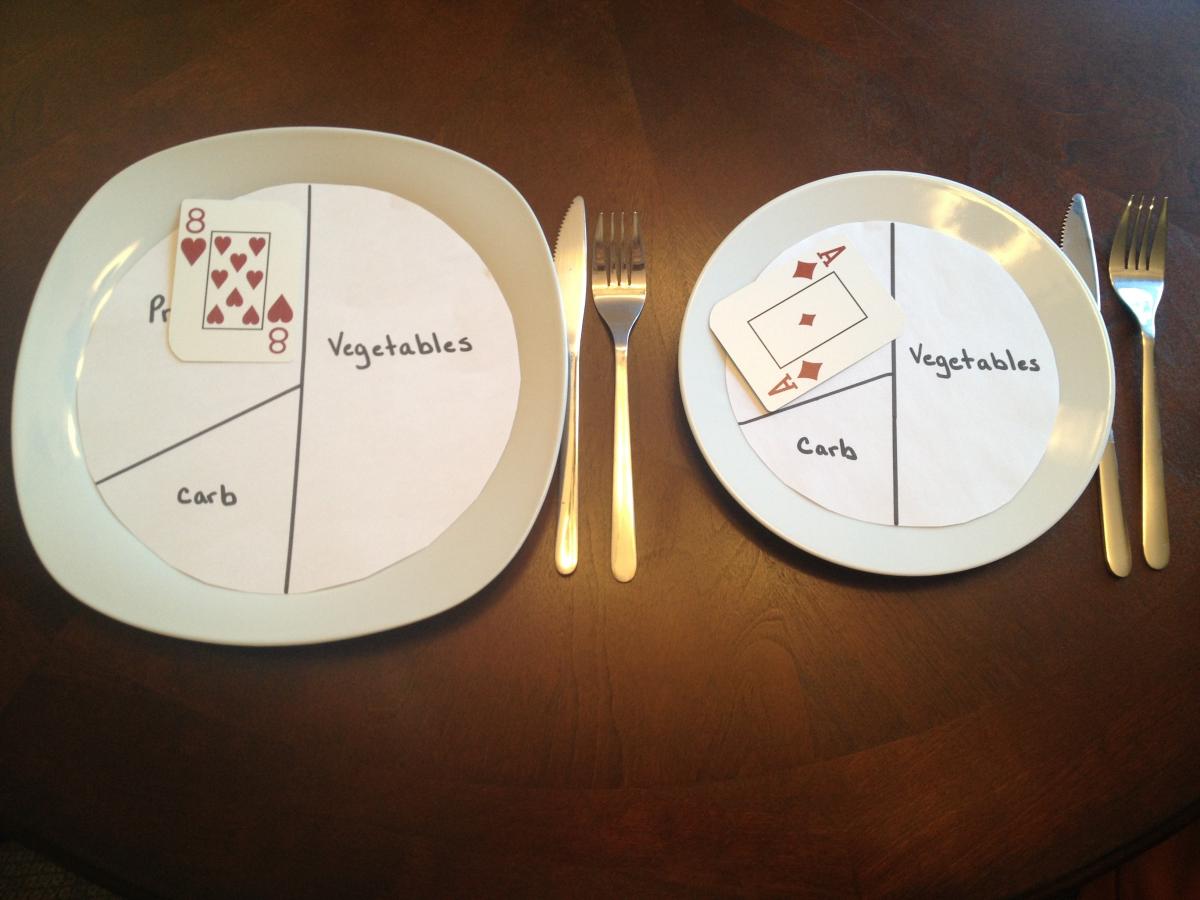
Again, take note of the photographs. Notice the playing card that is in the dish. The playing card represents the approximate size of 5 ounces of protein-meat, chicken, pork or fish. For most of us, this represents a maximum serving amount. Imprint that visual perception in your mind, then apply it going forward. Below are measuring cups. The picture on the left has a 1 cup on it, the right has a 1/2 cup. Fill your plate with less.
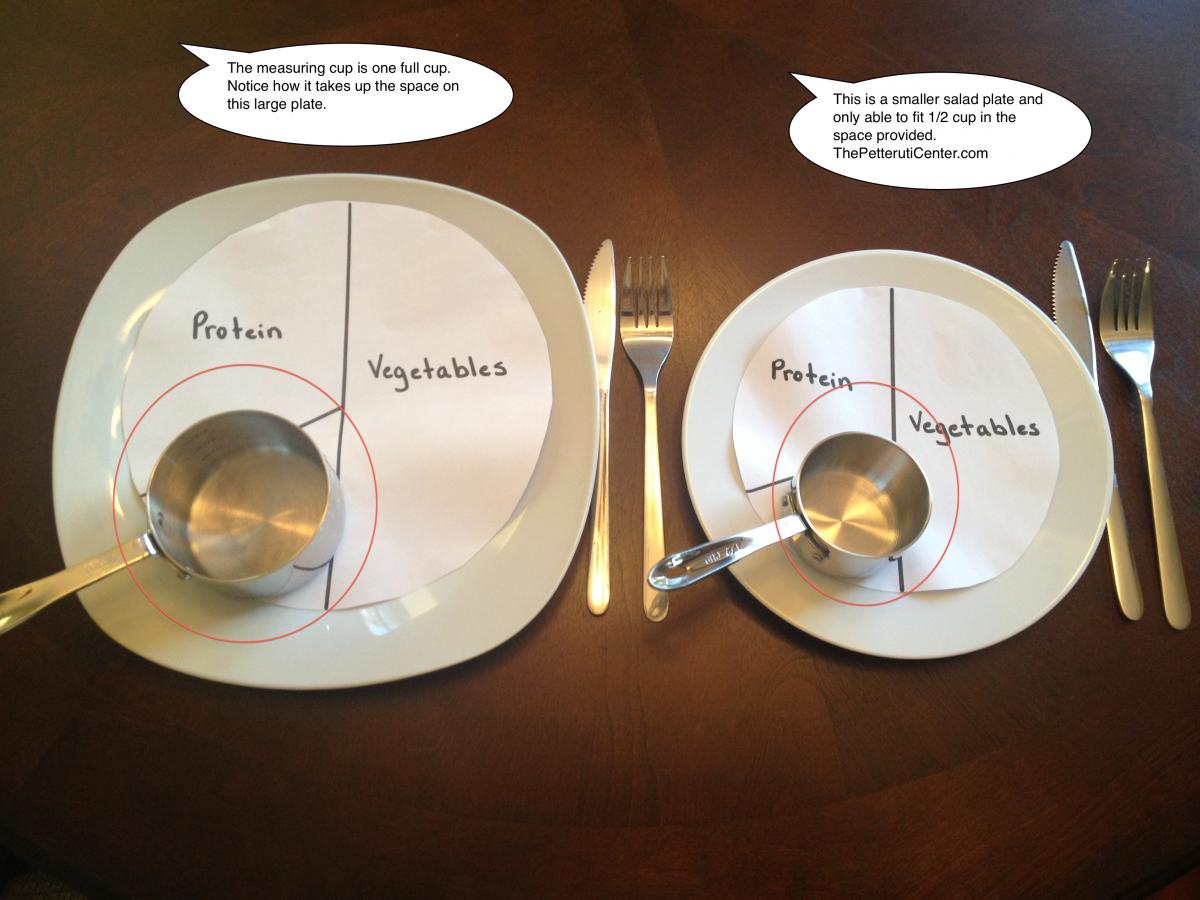
Remember, never rely on your sense of satiety to signal when you have had enough to eat. Our stomachs are elastic spaces, capable of stretching enormously and anatomically structured with the hole at the bottom. Simply put, our stomachs are impossible to fill. In addition, there is typically a 15 to 30 minute lag time between gastric stretching and neurological signaling of being "stuffed" this was a handy engineering trick in the days when meals were uncertain and the gap between them could be long. In our modern "horn of plenty" culture, it's a formula for dangerous weight gain.
To change your body shape, start by changing the vessels that carry your food. Pack away your dinner plates and spend the next couple of weeks eating off of salad plates only. Consider putting out only smaller dessert forks. This will force you to scoop up less food with each bite, slowing down your rate of consumption.
The size of your glasses for beverages really shouldn't matter since your beverages should be unsweetened and 0 cal. However, if you have any achieve that level of nutritional changes yet, then try putting out juice glasses for all of your beverage consumption. Just make sure not to put any juice in them!
While you're shrinking your plates, remember to leave the food away from the table. If someone wants more food, they should be forced to leave the table, walk over to where the food is being stored and serve themselves a new plate. This small inconvenience has been shown to deter overheating. It seems one thing we can count on is our own laziness. The more effort we have to put forth to acquire our food, the less likely we are to bother (see, and you thought all of that sloth was a negative trait! It's all in how you use it).
The more we know about how humans behave, and the more we accept the notion that we are in fact humans and subject to the same behavioral traits as others of our species the better our chance to permanently change our lives.
So have some fun this weekend! Have a "plate smashing party " see how far you can toss those oversized plates, frisbee style. Maybe to shrink your waist, you should start by shrinking your plates.
-Dr. Stephen Petteruti
To learn more about I.M.120, contact us here. I.M.120 specializes in Medical Weight Loss, Anti-Aging and Regenerative Medicine, Family Practice and Aesthetic Medicine.
Vlog
View Our Videos
Categories
Archive
- March 2011 (1)
- August 2011 (1)
- November 2011 (2)
- December 2011 (2)
- January 2012 (1)
- January 2013 (2)
- February 2013 (3)
- March 2013 (2)
- April 2013 (4)
- May 2013 (3)
- June 2013 (9)
- July 2013 (1)
- August 2013 (6)
- September 2013 (3)
- October 2013 (1)
- November 2013 (4)
- December 2013 (1)
- January 2014 (8)
- February 2014 (3)
- March 2014 (3)
- April 2014 (1)
- May 2014 (1)
- July 2014 (2)
- September 2014 (2)
- October 2014 (1)
- November 2014 (6)
- December 2014 (2)
- January 2015 (4)
- February 2015 (1)
- March 2015 (4)
- April 2015 (7)
- May 2015 (3)
- June 2015 (1)
- July 2015 (3)
- August 2015 (2)
- September 2015 (1)
- October 2015 (3)
- November 2015 (1)
- January 2016 (1)
- February 2016 (1)
- April 2016 (3)
- August 2016 (1)
- November 2016 (1)
- December 2016 (1)
- March 2017 (1)